


Formlabs desires to make industrial 3D printing really feel much less like industrial 3D printing.
The corporate has spent greater than a decade constructing printers that make professional-grade prototyping cheaper and sooner. With the Fuse X1, Formlabs is making use of that playbook to larger industrial systems, the place worth, set up, and day-to-day operation have typically saved the expertise out of attain for smaller producers and engineering groups.
The brand new machine is a selective laser sintering (SLS) printer constructed for producers, engineering groups, product builders, and 3D printing service bureaus. The printer can end up production-quality components in lower than 24 hours. (It begins at $84,999, is offered for order right this moment, and is anticipated to start transport within the fourth quarter of 2026.)
For CEO Max Lobovsky, that worth hole is central to the purpose. Formlabs, based in 2011 out of MIT, has lengthy tried to make 3D printing inexpensive and simpler to make use of. “The purpose has all the time been make it simpler to go from an concept to an actual factor,” he says.
The Fuse X1 can be an announcement about the place Formlabs thinks 3D printing is headed. The corporate helped popularize skilled desktop 3D printing and has since expanded into automation, supplies, dental functions, industrial prototyping, and manufacturing. (Quick Firm named Formlabs one in every of its Most Revolutionary Corporations in manufacturing in 2024.)
Now Formlabs is making an attempt to push that very same logic into a much bigger, pricier, and extra demanding a part of manufacturing. The corporate says it has about 700 staff and greater than $250 million in annual income, and has been worthwhile for greater than two years. It has additionally raised significant venture backing, together with a $150 million SoftBank-led Collection E in 2021 that valued the corporate at $2 billion, with earlier buyers together with New Enterprise Associates, Foundry, and Autodesk.
Its clients have printed greater than 500 million components utilizing Formlabs printers and supplies. Earlier merchandise, together with the Type 4 and the Automation Ecosystem, have been about making 3D printing sooner, extra dependable, and extra repeatable. Fuse X1 takes that push into large-format SLS.
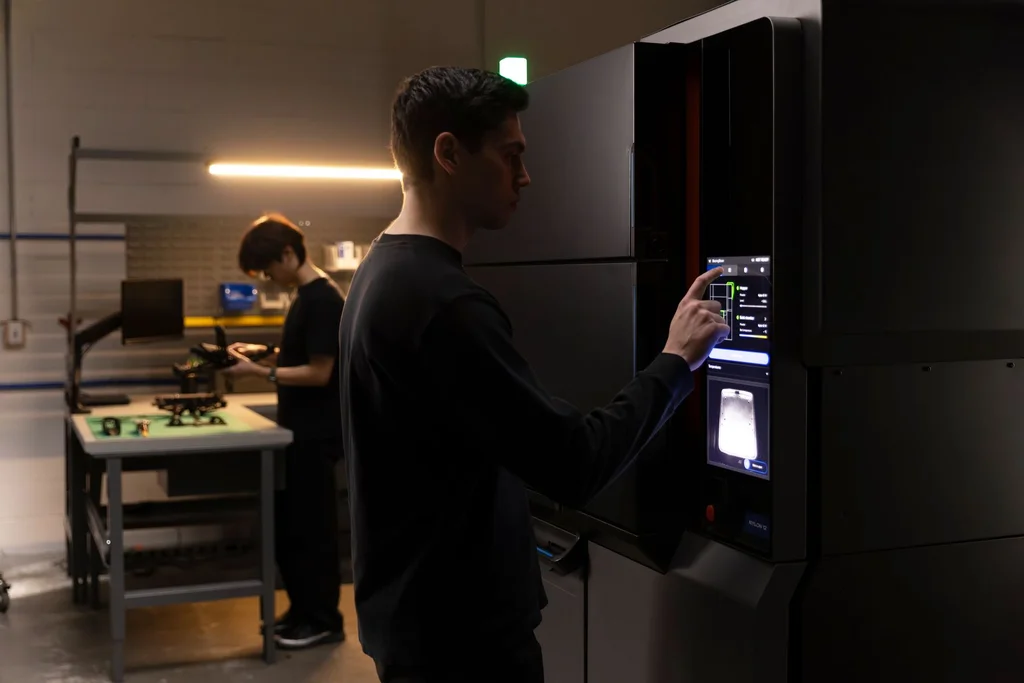
The brand new machine, a black cupboard that appears extra like nameless manufacturing unit gear than a futuristic robotic, has been in growth for about three years. Greater than 50 folks labored on the undertaking, which required roughly $50 million in R&D, in accordance with Dávid Lakatos, the chief product officer. Constructing it, he says, was by no means merely a matter of designing {hardware}: “It’s type of equal components {hardware}, software program, and supplies,” he tells Quick Firm.
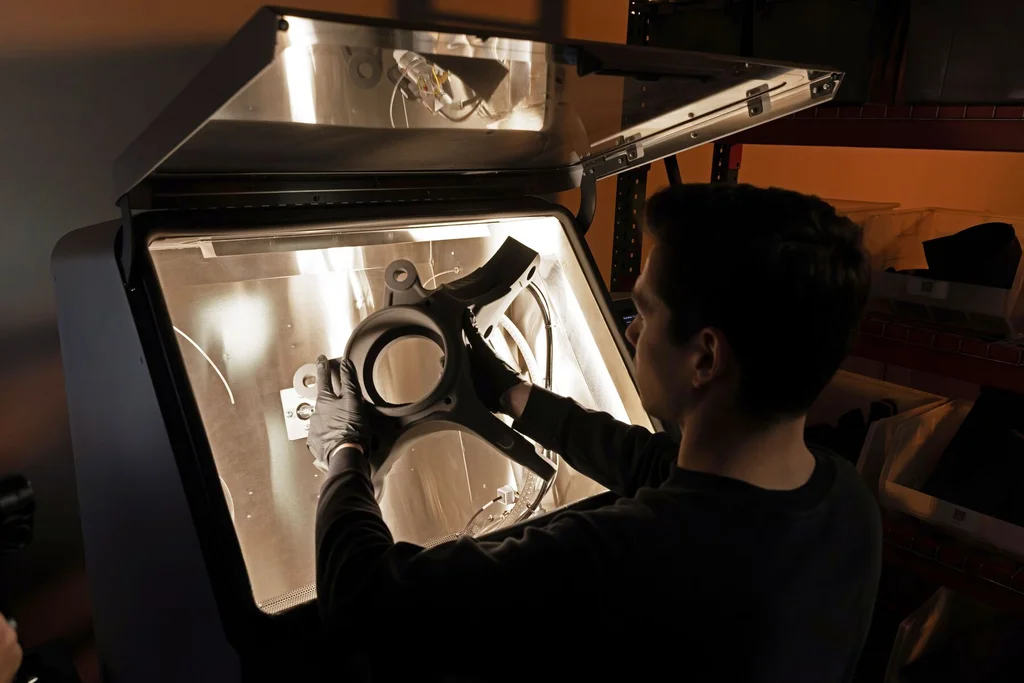
The laborious half begins as soon as the powder heats up. SLS makes use of a laser to warmth powdered materials till the particles fuse into sturdy strong components. The strategy, often called sintering, can produce robust, complicated objects, nevertheless it relies on exact warmth management. If the temperature drifts, components can fail or come out inconsistently. Fuse X1 makes use of 13 unbiased thermal zones and a system that Formlabs calls Adaptive Thermal Management to maintain situations steady throughout the construct chamber. Formlabs says this lets customers pack extra components into every print run.
The printer additionally has an AI-powered monitoring system referred to as Print Intelligence, which makes use of laptop imaginative and prescient and thermal imaging to examine every layer throughout a print. When it detects a defect, it may well take away the affected half from later layers, serving to save the remainder of the construct slightly than losing the entire job.
The early use circumstances present the vary Formlabs is chasing. Radio Flyer used Fuse X1 to hurry up work on its Flyer Loop cargo e-bike, transferring away from slower, multipart prototype processes. Tesla has used the printer at its Gigafactory Nevada for tooling, end-use components, and production-line parts, together with small shims utilized in battery manufacturing. Autotiv Manufacturing, a New Hampshire service bureau, has used it as a lower-cost different to dearer industrial machines.
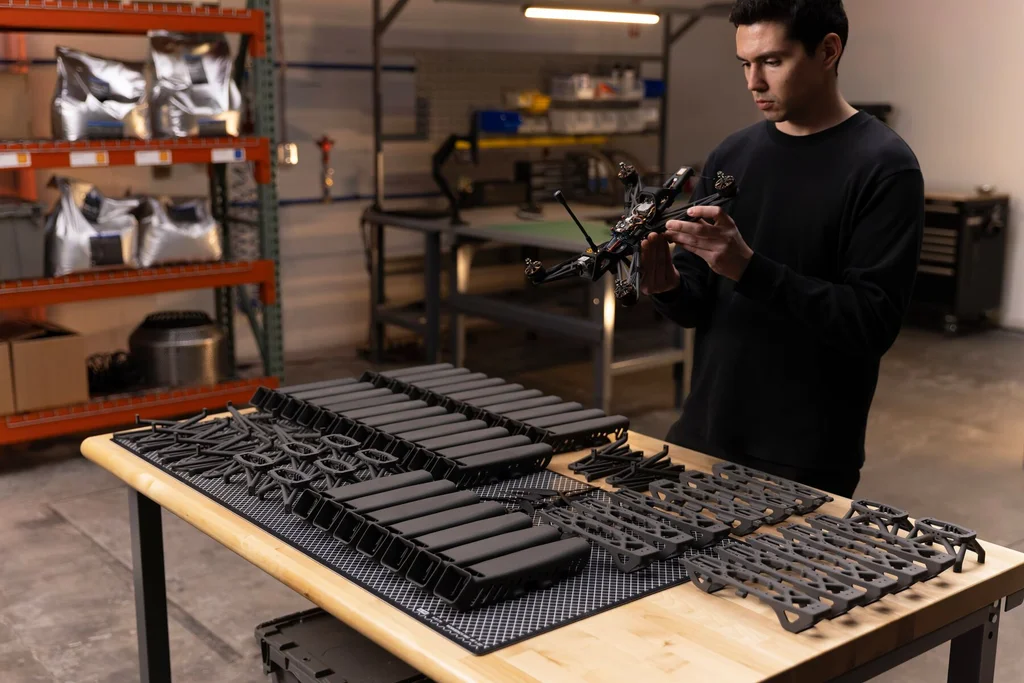
One of many extra hanging examples is in Ukraine. Lobovsky, whose dad and mom are from Ukraine, visited the nation in November and noticed Formlabs printers being utilized by Skyfall, one in every of Ukraine’s largest drone manufacturers. Formlabs had not been focusing on the nation as a significant market, he says, however demand has surged with the conflict. “Ukraine went from 0% of our international gross sales to six%, which is sort of unusually giant for a rustic that’s like 0.2% of the global GDP,” Lobovsky says. “And that’s like 100% drone manufacturing.”
Formlabs can be making an attempt to make that course of simpler for patrons that don’t need to purchase a printer in any respect. Its Type Now service lets clients add a file and order printed components instantly, with turnaround instances as brief as 48 hours in some markets. Lobovsky sees that as the tip level of the corporate’s effort to make bodily manufacturing sooner and simpler. “The ultimate type of that’s no printer in any respect,” he says.
Fuse X1 will check how far Formlabs can push that concept inside factories, service bureaus, and engineering labs. The pitch is straightforward: sooner components, decrease prices, fewer set up complications, and a shorter path from digital design to bodily object.
