


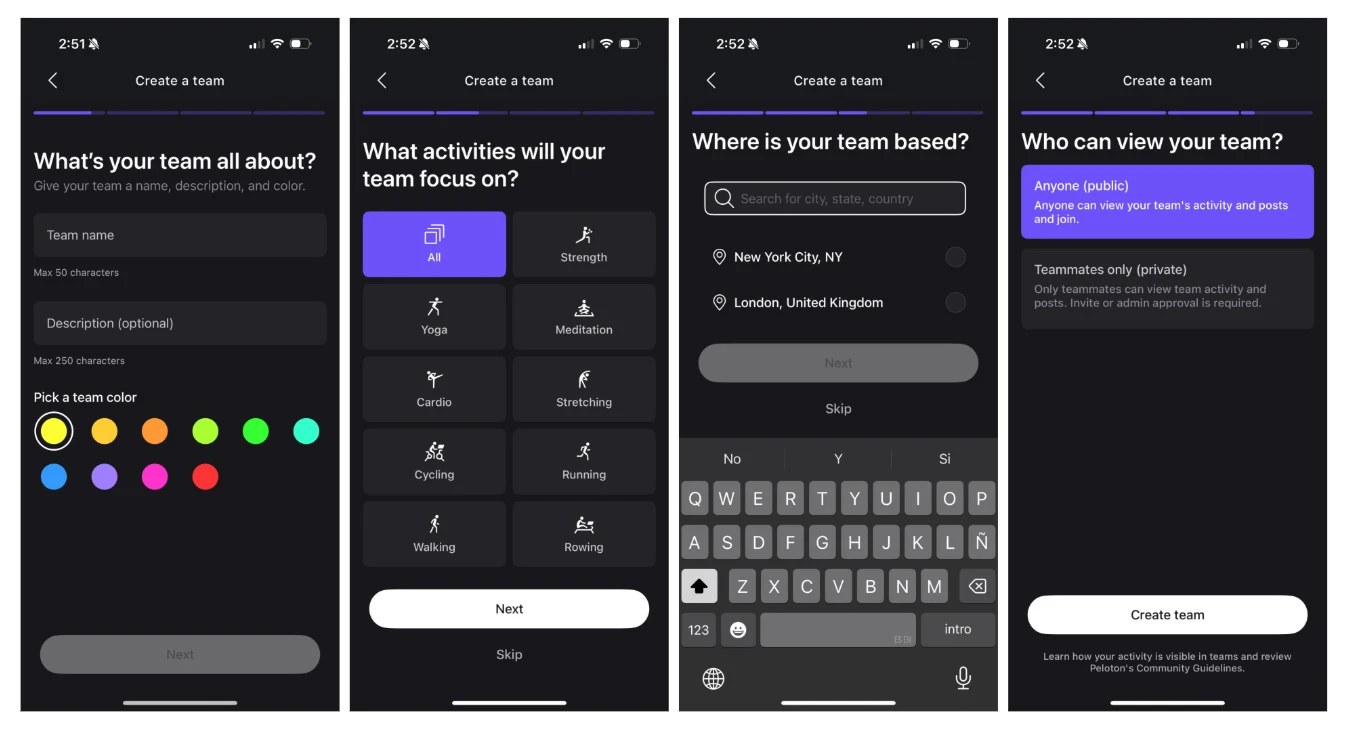
Peloton has lengthy been synonymous with a motorbike. However quickly, you might realize it as one other social feed. As a result of in the present day, the corporate is launching group teams referred to as “public groups” on the platform, permitting as much as 50,000 folks to prepare to chase their health targets and share digital excessive fives collectively.
Peloton’s bikes and their linked reside courses have been a COVID-19 success story, and the corporate ballooned in reputation in 2020. The previous few years have been extra attempting, as the corporate has slowly shed subscribers and lost billions of {dollars} over 2022 and 2023. On the similar time, nevertheless, Peloton has diversified. It affords extra tools, together with a treadmill and rower, together with an expanded health app that helps 16 train modalities together with weightlifting and yoga. Coupled with layoffs, the technique appears to be serving to, as within the final two quarters, Peloton’s expenses are down and its subscription income is up for the first time since 2022.
Nonetheless, Peloton wants to keep up (and develop) its subscriber base past its 6 million members in the present day, and conserving its customers energetic and invested alongside friends in groups is a manner to try this.
“What made Peloton so profitable was . . . feeling the presence of others in your personal residence,” says Peloton’s chief product officer, Nick Caldwell, including later that new digital “communities make us stickier and extra partaking.”
Caldwell hails from stints at X and Reddit. He is aware of how the social sausage is made, and calls the affect of social networks “ambiguous,” however he contends that he’s at Peloton to make issues which might be “unambiguously constructive for the world.”
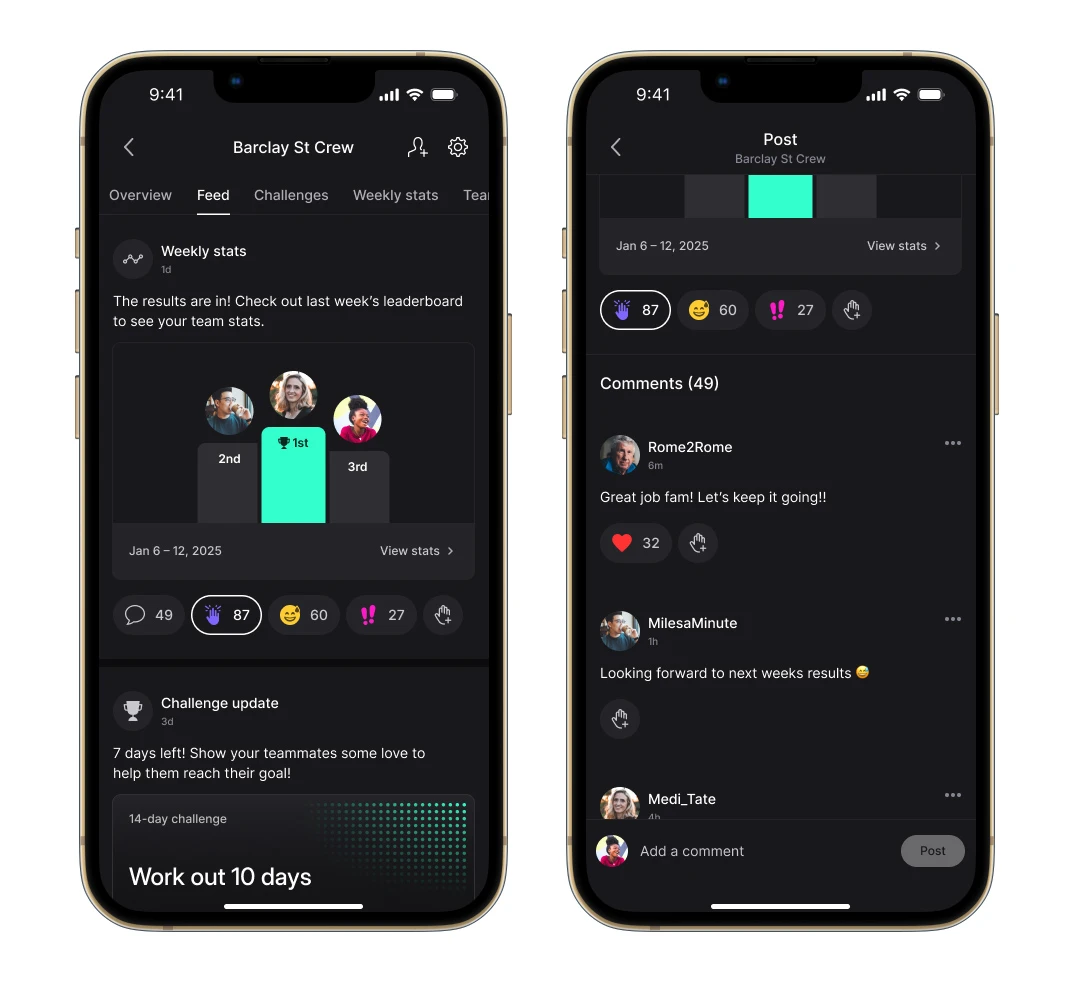
To understand this imaginative and prescient, Peloton has been constructing new social scaffolding for greater than a yr. Its first model of its Exercise Feed went reside in 2023. In Could 2024, it launched the flexibility to find your friends by their name on the service, then it expanded to letting you group up with them in non-public groups, typically consisting of about three to 4 folks. In these small teams, you’ll be able to share non-public messages, and both compete in opposition to each other or work collectively towards a purpose like working 10 miles. The groups have their very own mini leaderboards. Principally, they’re an area for pals to trace collectively outdoors the confines of a category. Peloton now hosts 80,000 non-public groups. And out of that, it’s now launching giant, public teams that may scale to tens of hundreds of individuals apiece.
“We see unimaginable will increase in engagement when folks be part of one in all these smaller groups which have three or extra members. That appears to be the candy spot,” says Caldwell, who notes referral passes from these small teams convert at a excessive fee, too.
Conserving the Peloton group constructive, and on subject
Caldwell says the inspiration for the feed-ification of Peloton comes from how Pelotoners have been already organizing on social platforms like Fb and Reddit, encouraging each other and sharing sources. Although in some ways, Peloton’s technique is simply as akin to what we see within the conventional social circles of figuring out as it’s newfangled social networks. Groups have fashioned to coach and fundraise for marathons for many years, and Peloton competitor Zwift has notably helped teams arrange to coach and race collectively on their platform for years. Peloton’s personal analysis finds that 70% of individuals desirous about on-line communities wished them particularly for help and accountability.
In fact, we reside in a new era of social misinformation—and it’s straightforward to think about Peloton’s protected area of self enchancment cracking open to pseudoscience coaching or vitamin debates, and the limitless sea of political partisanship that’s instantly intertwined with such subjects. After I ask if I might submit a political opinion on Peloton’s app, Caldwell wasn’t certain.
“I’ll be sincere, we’re nonetheless engaged on the precise insurance policies,” says Caldwell, noting the instruments at any social community’s disposal are “encouragement” and “enforcement” (although the group pointers clearly prohibit speech like hate). “We’re nonetheless attempting to resolve what the road goes to be, and we’re specializing in establishing our insurance policies and our values in a manner that’s rather more oriented to encouraging folks to speak about health and wellness journey than we’re encouraging them to speak about different subjects.”
The corporate does wish to guarantee vitamin and health info being shared is “science-backed” to remain authoritative within the area. For now, moderation is dealt with by admins who discovered and handle every workforce, who Peloton says shall be geared up with extra instruments over time. And long run, Peloton is contemplating the way it might play a stronger organizational and editorial hand in these huge teams.
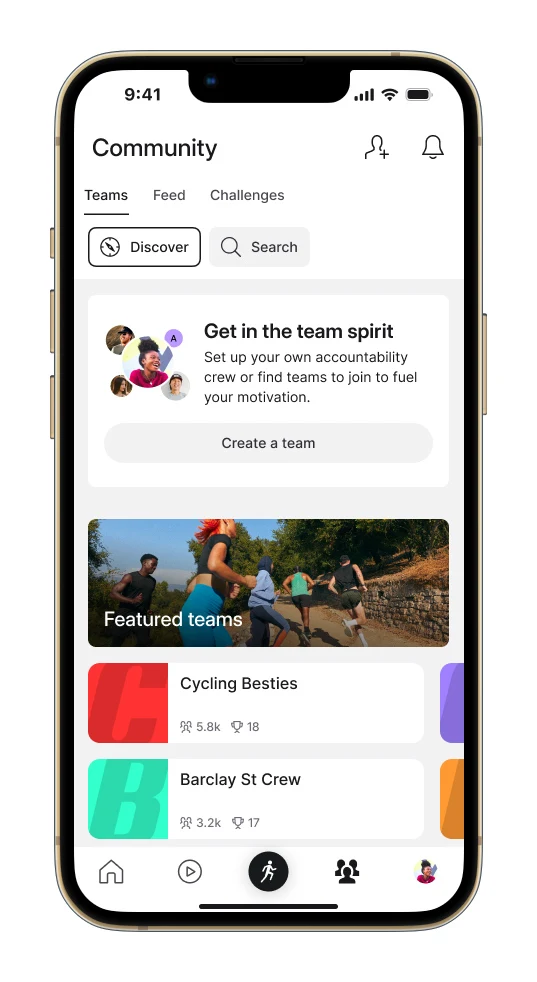
“It could be wonderful if we might, alongside no matter public groups find yourself forming, that we might have groups that have been Peloton led, possibly hosted by a few of our instructors, or possibly hosted by consultants that we carry into the group,” says Caldwell. “I feel if we did that, it will elevate this expertise even additional.”
Peloton has so much deliberate outdoors of its social feed, and Caldwell is especially desirous about how the corporate can leverage AI to customise exercises. Right this moment, AI will assist runners observe tempo targets distinctive to their efficiency and plans, however into the long run, Caldwell needs Peloton AI to assist with somebody’s well being much more holistically.
“We will be taught out of your efficiency and proceed to supply recommendations for how one can not simply enhance your exercise plan, however your steps in direction of your total wellness,” says Caldwell. “And I feel it’s going to be wonderful when all of it comes collectively that manner.”
