


Most individuals knit with needles. Merel Karhof knits with the wind.
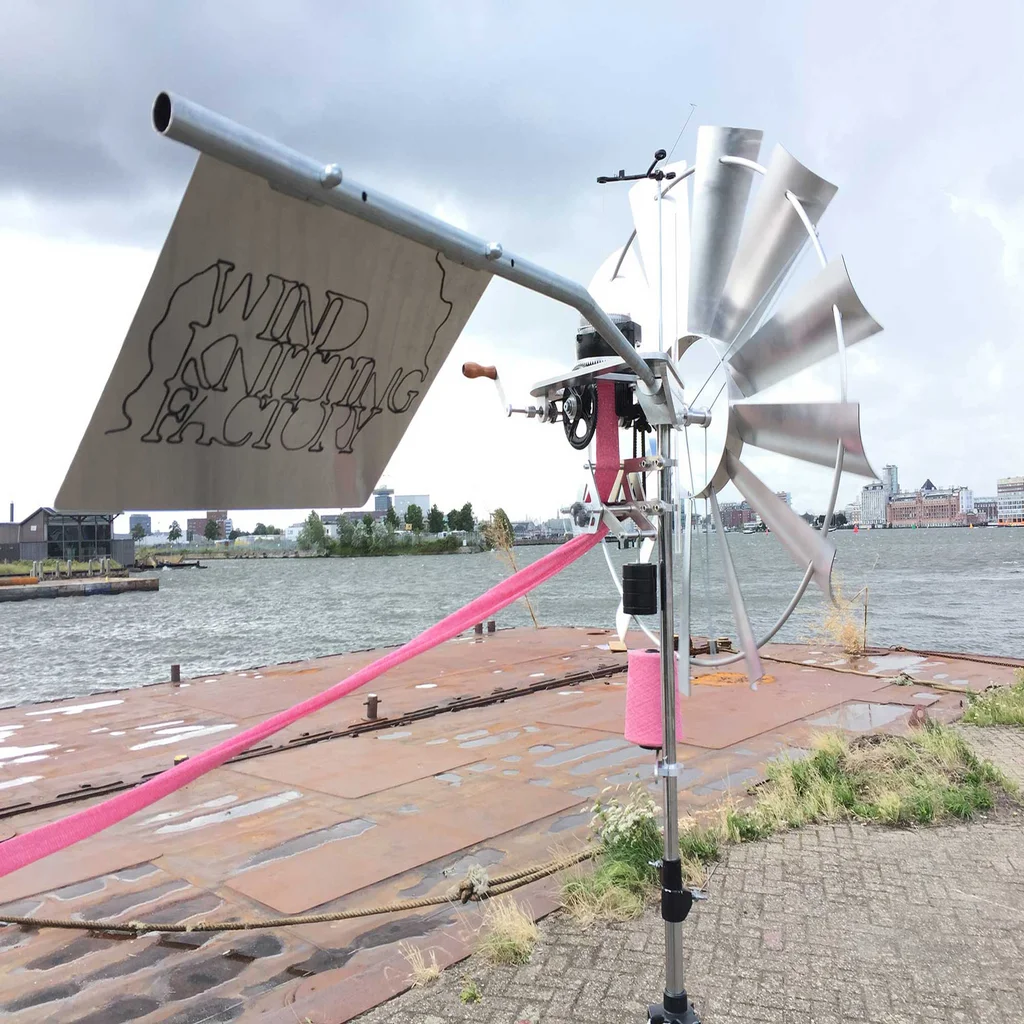
The Dutch designer, who teaches on the London Faculty of Style, has been on a quest to make wind energy tangible for greater than a decade. In October, she displayed her “Wind Knitting Manufacturing unit” at Dutch Design Week in Eindhoven, the place she remodeled the wind sweeping by way of town into an engine of creation, and made scarves out of it. “By making these scarves with the wind, individuals can see that we don’t solely want to reap the wind from large wind generators, however we will already produce one thing with small quantities of wind,” she later informed me. “There’s a free power supply round us which might create issues for us.”
Karhof’s fascination for the wind started considerably serendipitously, throughout an project. Whereas she was finding out on the Royal Faculty of Artwork in London, Karhof got down to stroll within the straightest doable line from the Royal Faculty of Artwork to the closest underground station at Kensington Olympia. Her experiment rapidly failed when she bought trapped in a cul-de-sac, however as she stood in the midst of the road, she felt a gust of wind on her face, and a bit mild went off in her head.
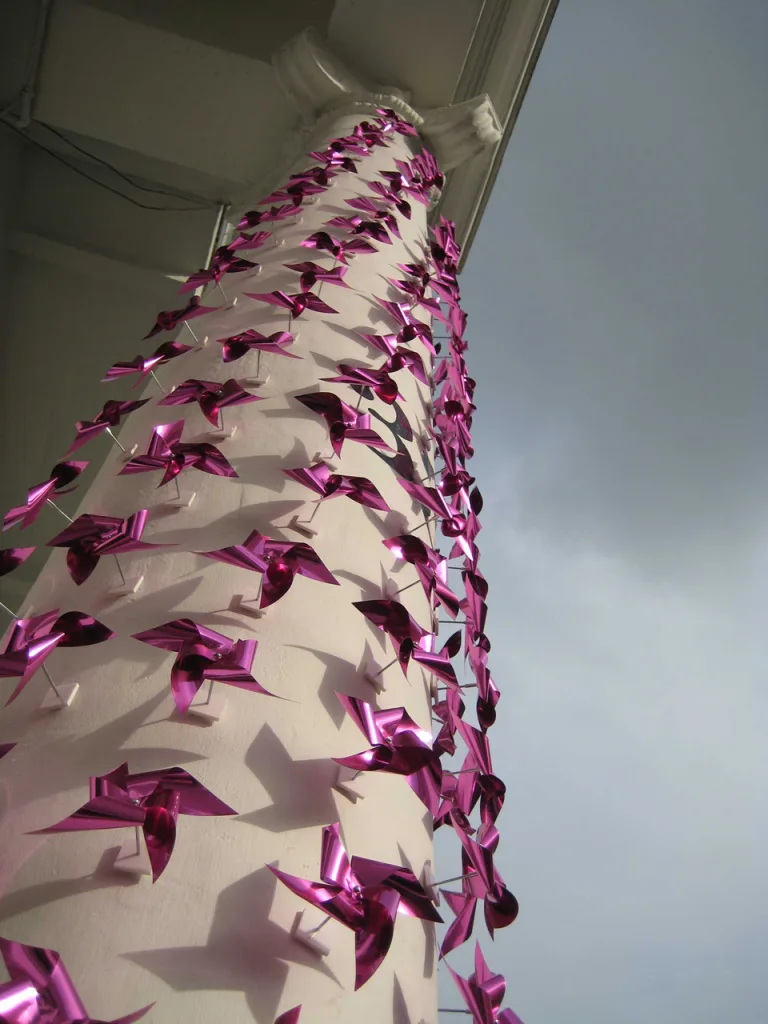
The designer spent the next years attempting to grasp wind—the way it behaves across the physique, the way it whooshes previous a constructing. As soon as, she even coated herself in miniature windmills akin to pinwheels and walked round London to get a really feel for a way the wind behaves when she opens a door or dives into the subway. Later, she coated a part of a constructing facade with comparable pinwheels, and even lit up an LED enterprise signal outdoors a hairdresser salon utilizing wind energy she had harvested from these tiny pinwheels.
Finally, she shifted her focus towards a challenge that might assist her translate wind right into a tangible product—one that might solely exist if the wind exists. She experimented with apple peelers and drawing machines, however finally landed on a youngsters’s knitting machine, and—as one does upon seeing a knitting machine—began constructing her first windmill.
Her first few makes an attempt had been underwhelming till she upgraded her knitting machine to a 1900s sock-knitting machine donated by the Audax Textile Museum within the Netherlands. A regular sock-knitting machine works by manually cranking a lever and rotating a cylinder that’s outfitted with needles. These needles then catch and loop yarn by way of their hooks, knitting it right into a seamless tube of material. In Karhof’s model, which she developed with an engineer from Imperial Faculty, the hand (which does the cranking) is changed by a mechanism that connects to a windmill that harvests the wind, then prompts the crank.
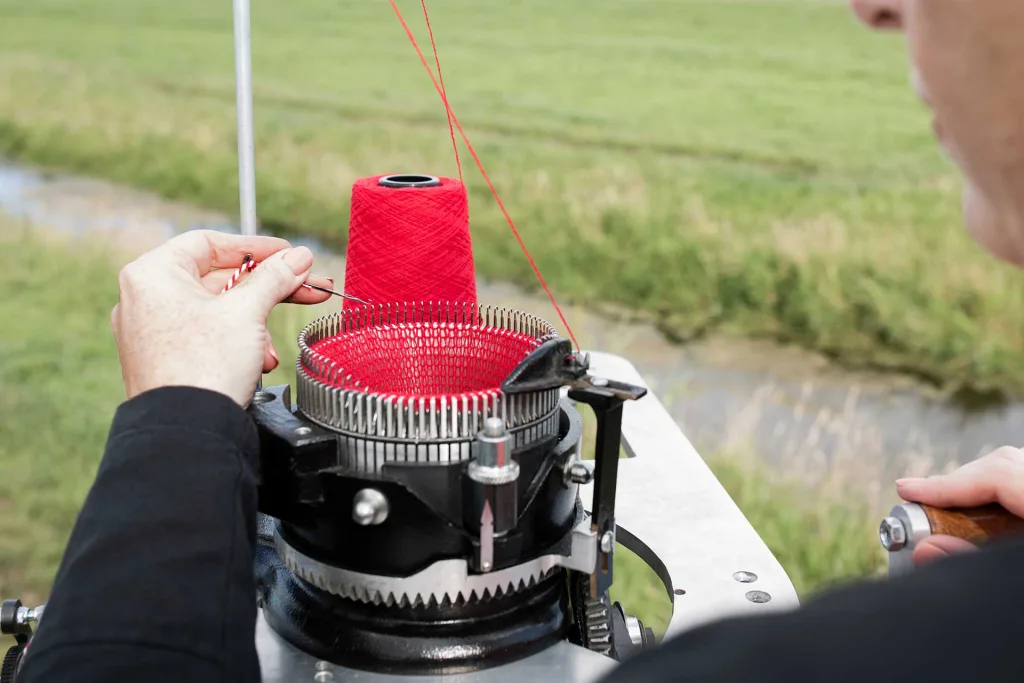
For now, she has constructed two wind-knitting machines. Each are 10 centimeters in diameter, which implies the designer can solely knit objects which might be 10 centimeters broad, however each machines are moveable, permitting her to comply with the wind and knit simply outdoors her studio or on the high of a lookout tower. Relying on the climate circumstances, she says it might take anyplace between 40 minutes to a full day to knit one scarf—a mesmerizing course of she likened to watching a campfire. (Every scarf’s label relays the time it took to knit it, for instance: “knitted in 185 minutes.”)
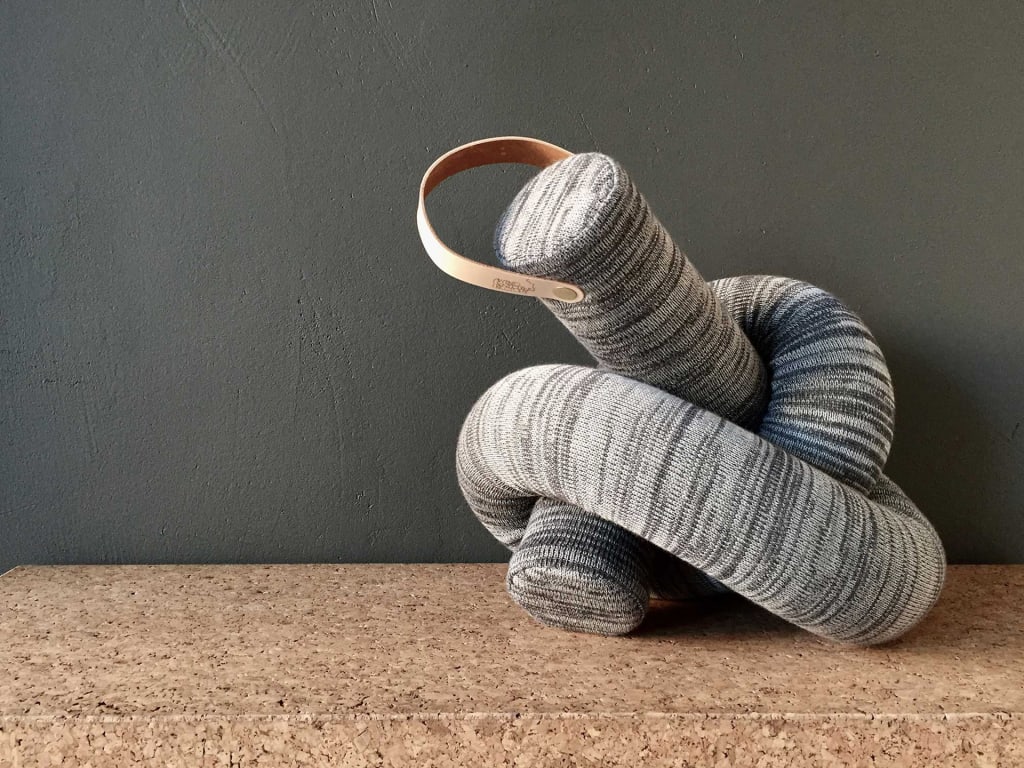
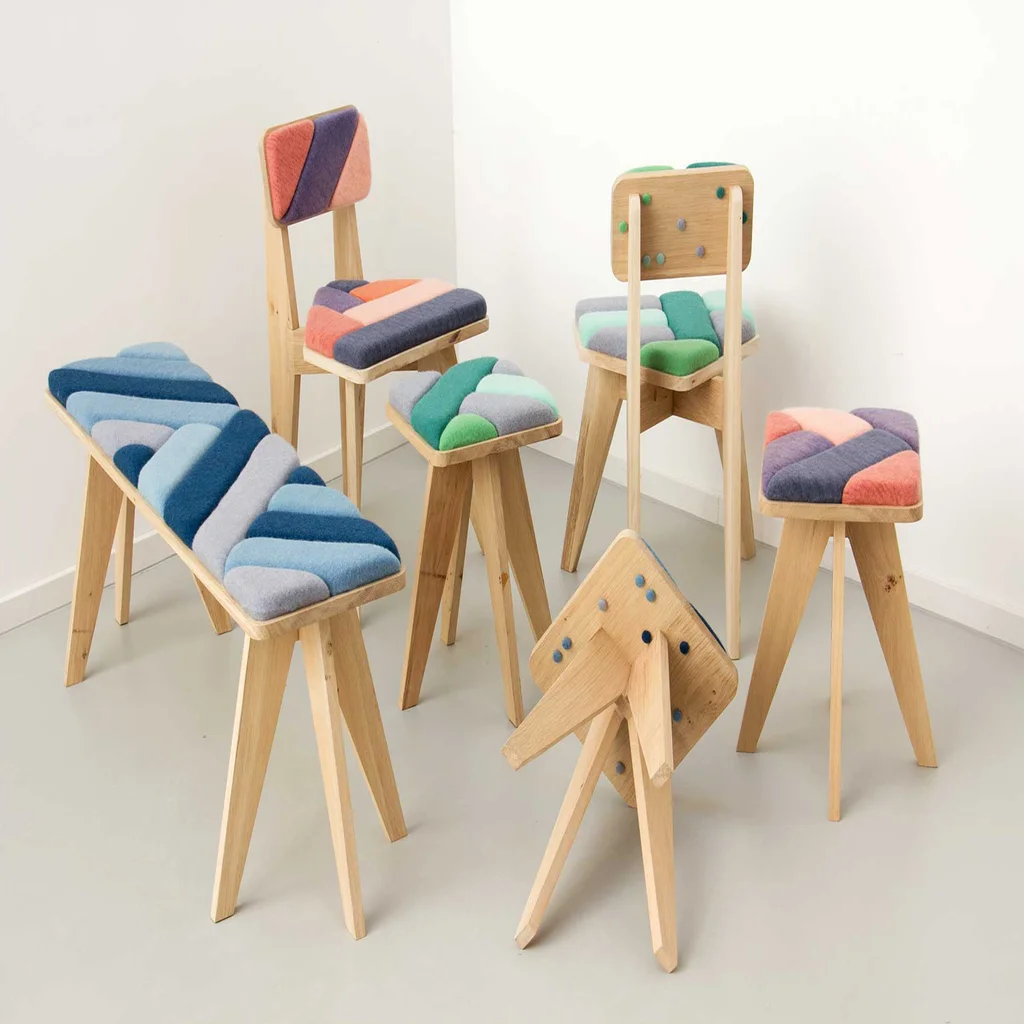
But it surely’s not simply scarves. For Swedish gallery Fiberspace, Karhof made a protracted tube-shaped pillow that she tangled right into a knot. (I believe it really works higher as an ornamental accent than as lumbar assist.) And again in The Netherlands, she has made stools, chairs, and benches that she upholstered with varied wind-knitted pillows of Kvadrat material, every of them 10 centimeters broad.
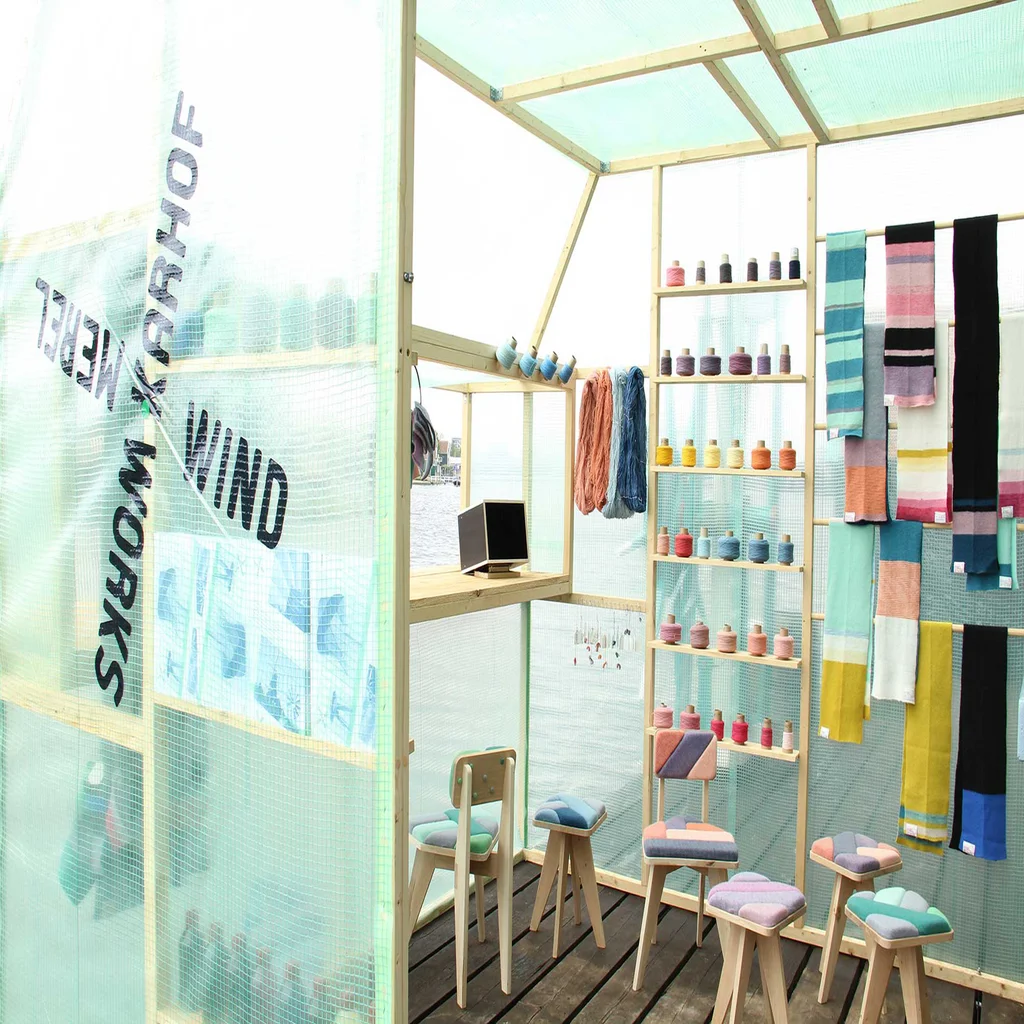
Curiously, this entirety of this furnishings assortment, aptly titled Windworks, was created utilizing windpower. For the event, Karhof joined palms with Zaanse Schans, a Dutch mill village identified for its centuries-old windmills. The bottom of every chair, for instance, was sawed in a wind-powered sawmill (Het Jonge Schaap). The yarn for the upholstery was then dyed in a windmill that was outfitted to grind pigments (De Kat), and the tinted yarn was lastly knitted into utilizing Karhof’s wind-knitting machine.
Karhof’s total operation shall be tough to scale except she raids all classic shops and repurposes each sock-knitting machine on the earth. But it surely serves as a poetic testomony to human ingenuity.
