


The Chinese language robotics firm UBTech has launched the U1, the primary mass-produced ultrarealistic human robotic. This marks the primary time anybody has manufactured and bought a humanoid robotic that truly resembles a human.
UBTech is framing the U1 as a human companion and believes the way forward for the robotics business lies in offering emotional help. The corporate’s chief model officer, Michael Tam, describes the human-robot companionship economic system as “the primary important state of affairs in human historical past with limitless emotional worth, boundless companionship, and full-life-cycle protection.”
In a press release, the corporate stated that 90 million folks in China dwell alone, and spoke of hypothetical makes use of resembling elder care, reception and hospitality, and “premium home service purposes” (no matter which means).
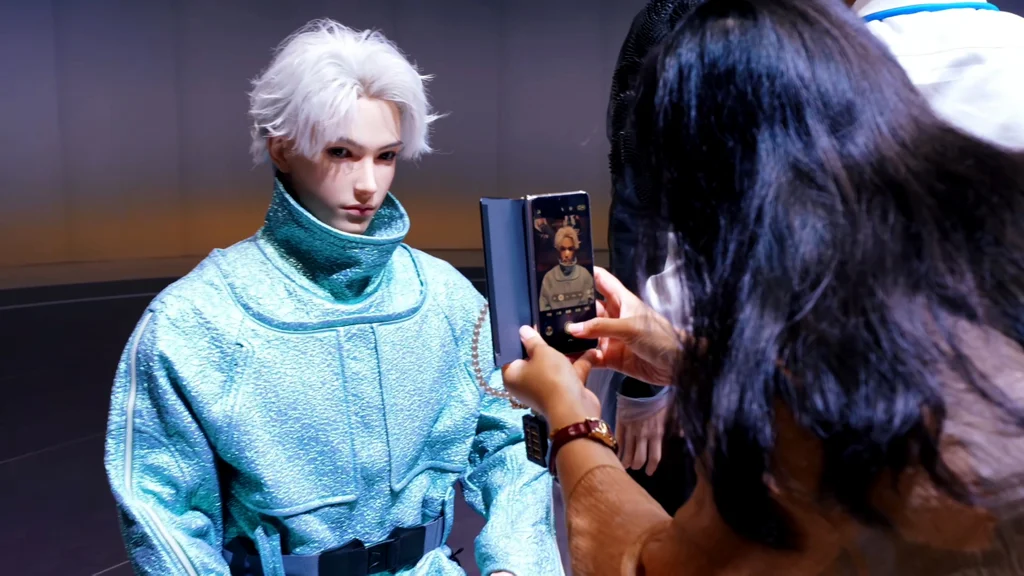
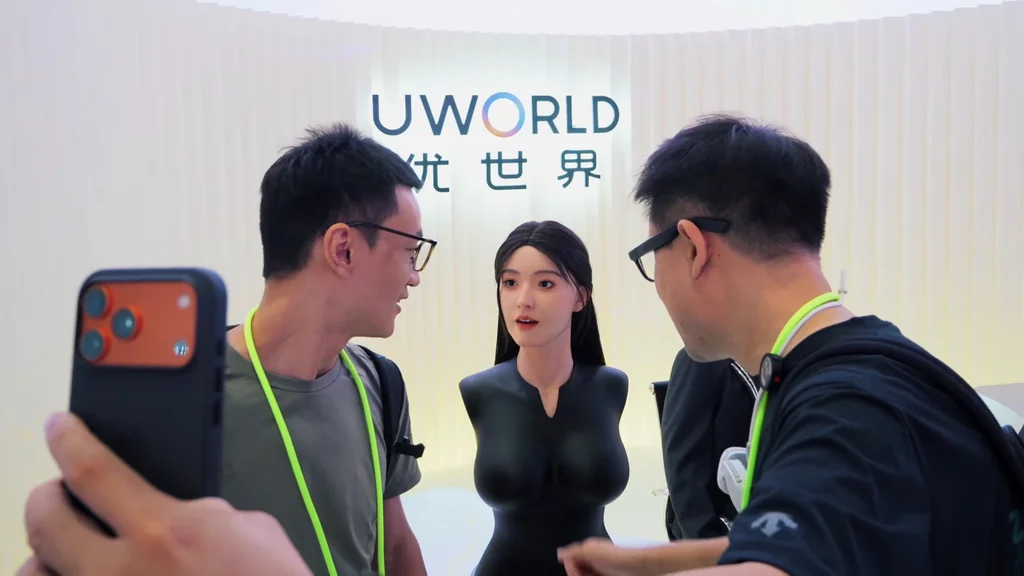
Eventually Tuesday’s launch in Shenzhen, representatives from the corporate touted the robotic’s capability to carry conversations and preserve eye contact. It nonetheless has loads of flaws—nobody is definitely mistaking this for an individual—however consider it as Model 0.1 of the replicants from Blade Runner, an vital leap for the way forward for embodied artificial intelligence.
A better have a look at the U1
What we noticed in Shenzhen final Tuesday is much from an ideal human robotic. The U1 sits deep in what’s referred to as the “uncanny valley,” as a result of the nearer a machine will get to trying human, the extra its flaws stand out, triggering an computerized sense of revulsion in your mind. It’s a byproduct of lots of of 1000’s of years of evolution that makes our mind shortly discover something that feels off.
The U1 has silicone pores and skin (those that’ve touched it say it feels identical to human pores and skin, “however chilly”). It’s capable of decide up on the tone of your voice, and processes feelings with out sending information to an exterior server.

However the phantasm breaks throughout interactions. Critically, its joint actions nonetheless give away the motors hiding beneath that pores and skin. Its bodily talents are restricted, its muscle tissue don’t transfer the best way a human’s do, and its “emotional intelligence” is, at backside, the product of sample recognition and language-model prediction, not actual feeling.
It gained’t take lots of of 1000’s of years for these robots to develop into androids indistinguishable from human beings, straight out of Philip Ok. Dick’s fiction. But, given the present targets of the robotic business, we might not see it in our lifetimes except extra firms guess on it.
The enterprise of humanoid robots
The U1 isn’t a supply robotic, a pill assembler, or a wheeled assistant like those already working the streets, hospitals, inns, and factories throughout China for months now.
Proper now, Chinese language firms like Unitree or Xpeng and American firms like Tesla or Determine AI are ignoring humanoids of this type, specializing in extra utilitarian designs. In truth, they’re principally ignoring the house market in the intervening time, designing robots with meeting strains and warehouses in thoughts.
It’s because placing one in every of these robots in a home is much extra difficult than deploying one in an industrial setting, the place environments are managed and duties are repetitive. A house has furnishings that strikes round, objects scattered on the ground, and youngsters, aged folks, or pets the robotic merely can’t afford to journey over.
There’s additionally the matter of human acceptance, a query with a solution that’s removed from settled.
A 2016 research found {that a} partially human-looking design was accepted by folks already aware of devices, however others didn’t prefer it in any respect. A 2025 study went additional by monitoring physiological indicators, coronary heart exercise, pores and skin conductance, and gaze, and located that human-like faces provoked stronger unfavorable emotional reactions than robotic-looking ones. However, a human-sounding voice had the other impact, calming customers and shaping a extra favorable impression.
No matter these unknowns and difficulties, UBTech believes that many individuals will need these human-like robots, not for functions like family chores however for companionship. In any case, a robotic will at all times be loyal to you, the corporate says.

The technical hurdles
To enter the market, robots will first must depart the uncanny valley.
Whereas these mass-produced androids would be the most lifelike robots but, watching them speak clearly reveals how crude their actions are. The human face runs on 43 muscle tissue, able to producing an estimated 10,000 microexpressions. The delicate movement of facial muscle tissue contracting and stretching are absent within the robotic, and that degree of element will likely be required to really behave like a human being.
According to Jiao Jichao, UBTech vice chairman and head of its humanoid robotics institute, “One of many largest challenges was making the robotic look and behave naturally after becoming advanced mechanical programs right into a human-sized physique, in addition to making certain its facial expressions matched speech and emotion and that it may ship constant efficiency at scale.” Hundreds of tightly packed elements sit inside a single head, and never one in every of them can fall out of sync with what the robotic is saying.

Professor Shoji Takeuchi’s crew on the College of Tokyo grew actual human skin cells over a robotic face and received it to carry a smile, which factors at among the lacking particulars.
“We recognized new challenges, resembling the need for floor wrinkles and a thicker dermis to realize a extra humanlike look,” Takeuchi famous, including that the repair requires “incorporating sweat glands, sebaceous glands, pores, blood vessels, fats, and nerves.”
And that’s simply the bodily aspect. The complexity of replicating the lip, tongue, and larynx motions to supply phrases (or simply lip-synch to an artificial voice) continues to be a long time forward. The software program wanted to run this can be nearer than the {hardware}, as our understanding of how these muscle tissue create expressions is sweet. Connecting the muscle tissue to an AI because it simulates feelings, is a completely totally different beast, nonetheless.
You will need to do not forget that the U1 is simply the primary alpha model of a humanoid robotic. Sure, it’s tough and much from the tip purpose, however it’s commercially out there and that’s an enormous growth.
A robotic clients truly need to purchase
The product web page on the JD.com online marketplace racked up greater than 1,000,000 views the second preorders opened, UBTech claims. Zhou Jian, UBTech’s founder and CEO, confirmed on the U1 presentation occasion that reservations—that are restricted until July 15—had already topped 13,000 items, backed by a refundable deposit of three,000 yuan (about $442).
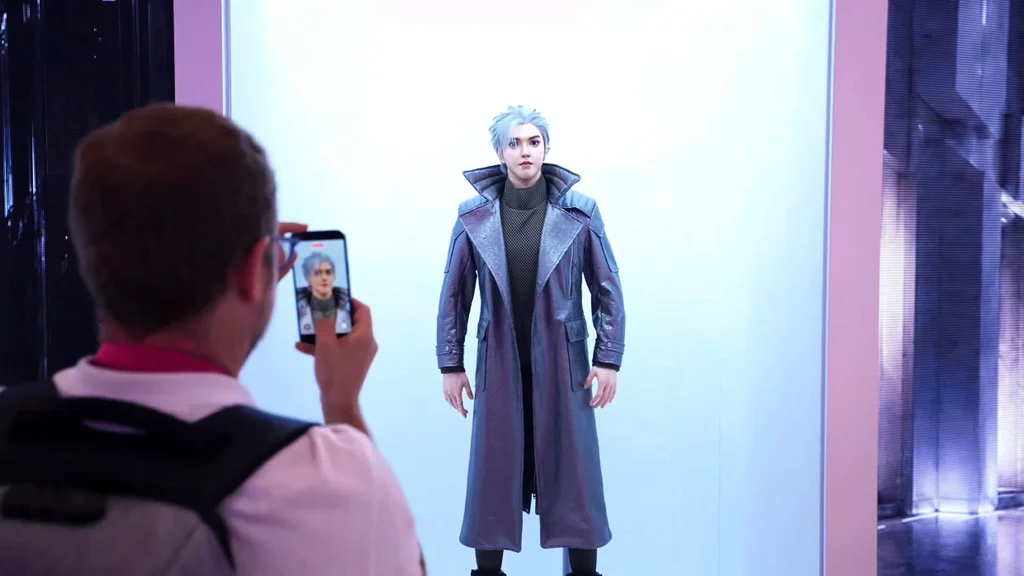
The corporate’s first model of this robotic is available in feminine and male variations. The previous standing 5 toes 6 inches tall, the latter 6 toes. Each characteristic 88 servomotors distributed throughout the physique’s joints, plus a dual-pivot biomimetic neck construction that UBTech says can replicate roughly 90% of frequent human actions. Costs vary from about $17,650 for the Lite model as much as $146,000 for the Extremely, with a mid-tier Professional mannequin in between for round $25,000.
The Lite ships as a compact, semitorso unit, whereas the Professional and Extremely are each full-body robots. The Extremely brings extra superior efficiency options and end fairly than a basically totally different platform.
The corporate claims that your new robotic companion is not going to spy on you. It doesn’t want an web connection to learn your feelings and act. A built-in chip handles every part by itself, contained in the machine’s physique. UBTech claims your private information stays saved on the system itself fairly than touring to a server. In idea, which means your privateness stays protected. That is key within the residence robotics market, the place robots will likely be seeing and listening to you always. You don’t need hackers to be accessing your robotic recollections in a cloud area.
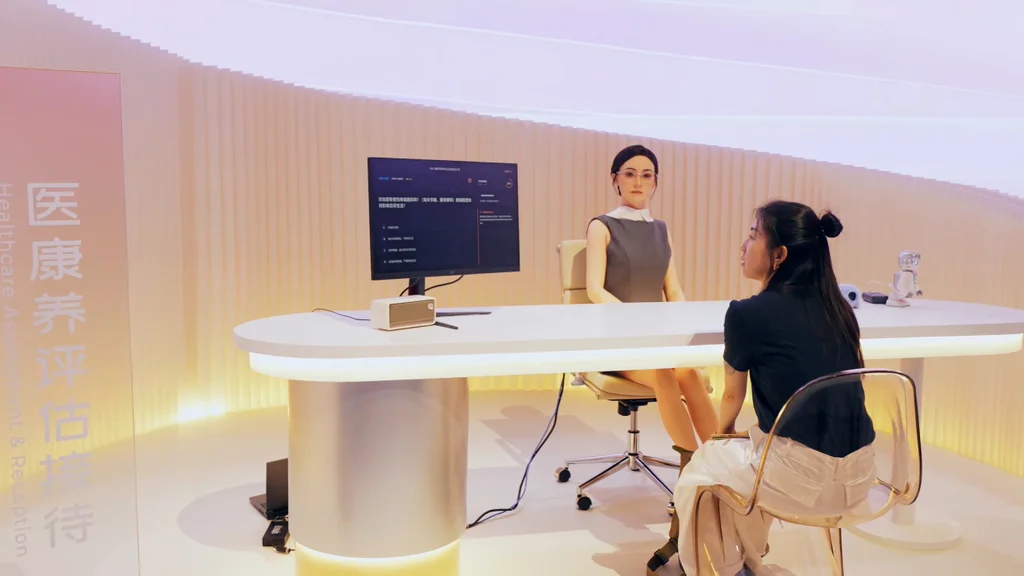
It stays to be seen what occurs as soon as early consumers unbox their companions after they begin arriving to houses on September 15. The U1 is just not pretending to be a replicant, nonetheless, and it’s not making an attempt to fully exchange a human. It’s the seed that desires to develop into that tree however, for now, it’s comfortable to remain nonetheless more often than not, giving a extra human-like physique to embodied AI.
Zhou believes these human-like robots will finally develop into the usual means folks work together with synthetic intelligence, and he’s betting on it. If that guess is profitable and the U1 catches on in China, it’s straightforward to think about different firms leaping into that market too, pouring billions in to speed up this subject of robotics. Which will get us a lot quicker than anticipated to the world envisioned by Dick or, in case you are extra the optimistic sort, Isaac Asimov. Even perhaps inside our lifetimes.
